All Categories
Featured

Understanding How Whole Life Insurance Builds Cash Value
The cost of an indexed universal life insurance coverage policy varies, depending on factors like your age, where you live, your health and the protection amount you select. According to one quote, a healthy, nonsmoking 34-year-old female might pay between$71 and $96 a month for an indexed universal life policy, assuming$250,000 of coverage. The very same person may pay$32 to$44 a month for a term life policy and between $177 and$245 per month for a whole life policy.
You might not require a life insurance policy after you've paid off your financial obligations and conserved for your huge financial goals, like retirement and your kid's college education. In these scenarios, a term life insurance coverage policy with a different retirement fund and other cost savings cars may provide what you need, and at a lower price tag. When you have a few quotes, you should: Compare protection limits, estimated regular monthly payments and administrative or management costs that come with each policy.
Rather, the insurance coverage company utilizes the index as a criteria to figure out how much interest to credit to the money worth part of your policy. If the index has a bad year, your credited interest might be lower(often even 0%), depending on your policy's terms. If your policy credits the.
full 10Complete, your cash value could worth might $5,000 in interest before fees and charges charges.
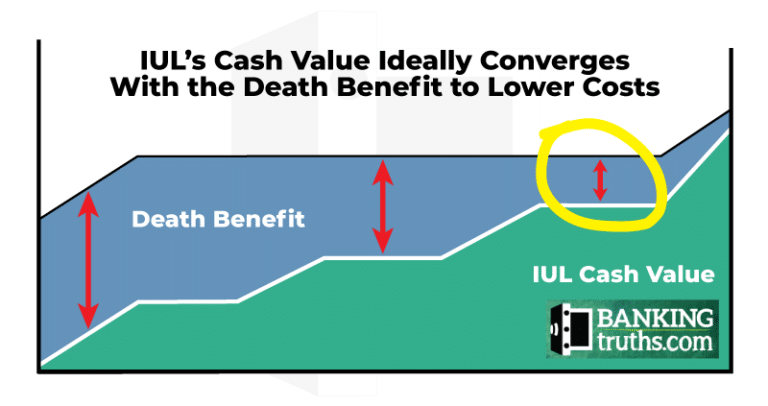
Suppose your policy has a 10 %cap, and the market index gains 15%that year. Even though the index increased by 15 %, your policy would just be credited 10 % before charges and other policy charges. Lots of IUL policies have a 0 %flooring, meaning you will not lose cash worth just due to the fact that the underlying market index has a negative year. For instance, if the index falls 18%, your credited interest may be 0%rather of -18%. That said, a 0 %flooring safeguards you from market losses, not from policy costs. An involvement rate figures outhow much of the index's gain is credited to your policy. For instance, if your policy has an 80 %involvement rate and the index increases 10%, you would get 8%interest (80%of the index's gain), presuming no cap limits the return. If the participation rate is 100 %, you would earn the full 10 %as long as it does not exceed the cap. Two policies tracking the exact same marketindex can produce extremely various outcomes depending on how these features are structured. Many indexed universal life policies let you select in between 2 kinds of survivor benefit: Your recipients receive a fixed survivor benefit throughout the life of the policy. As your money value grows, it usually enters into that overall survivor benefit instead of being paid in addition to it.

Latest Posts
Direct Consumer Advice for Buying 2026 Insurance Products
Health Insurance Strategies for Individual Security

Requesting Individual Health Insurance Quotes Fast